
JAPANESE TEMPLE



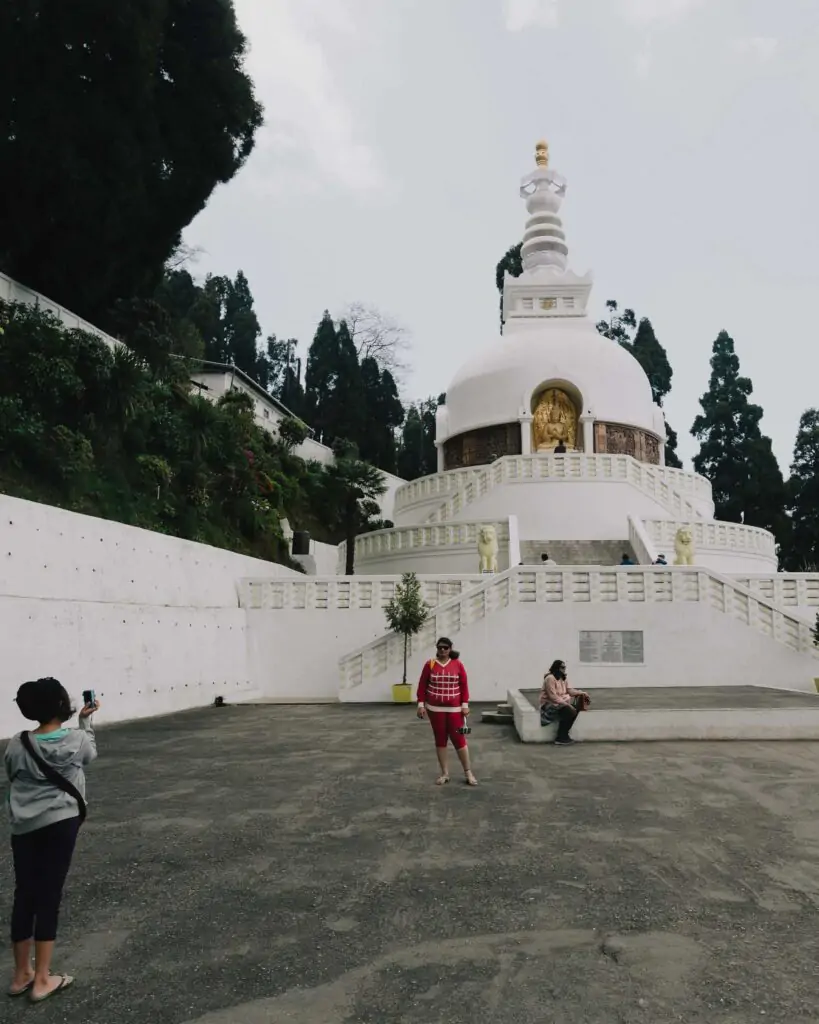
The Japanese Temple and Peace Pagoda in Darjeeling offer a singular experience, seamlessly blending spiritual tranquility, distinct Japanese architecture, and some of the most breathtaking views the Himalayas have to offer. It is a mandatory stop for any visitor seeking both serenity and spectacle.
The Darjeeling Peace Pagoda (Shanti Stupa) is not merely a local shrine but a powerful part of a global movement for peace. The foundation stone for the Pagoda was laid in 1972, and the monument was finally inaugurated in 1992, standing as a permanent symbol to the pursuit of global harmony.
A Symbol of Non-Violence
The entire complex was conceived and constructed under the guidance of Nichidatsu Fujii, a Japanese Buddhist monk and founder of the Nipponzan Myōhōji Order. Deeply affected by the tragedy of World War II and profoundly influenced by his close friendship with Mahatma Gandhi, Fujii Guruji dedicated his life to promoting non-violence (Ahimsa). The pagodas—including this one—were built as shrines to world peace, intended to serve as a focus for people of all creeds to unite.
A visit here provides a palpable sense of inner peace, which can be deepened by engaging with the spiritual practices of the resident monks.
The two-story, white Japanese Temple (Nipponzan Myōhōji Buddhist Temple) offers a profound sense of calm upon entry, characterized by the traditional Japanese architectural style. Visitors are welcome to enter the prayer hall and can often join the daily prayer ceremonies (typically held early morning and evening). Here, you can meditate to the solemn, rhythmic chanting of the monks and the deep, reverberating beat of the Ho-ko drum, creating a truly immersive and spiritual atmosphere.
Perched atop the Jalapahar hill, the Peace Pagoda is both an architectural marvel and a premier viewpoint. As you climb the stairs of the stupa and walk the circumambulation path, you are rewarded with an immense, 180-degree panoramic view of the Darjeeling town, the surrounding hills, and the magnificent snowy peaks of the Himalayas.
The Pagoda itself is a powerful architectural structure. The brilliant white dome signifies purity and peace, while its walls showcase four large, gilded statues of Lord Buddha facing the four cardinal directions, depicting the key moments of his life (Birth, Enlightenment, First Sermon, and Parinirvana). These are complemented by intricate sandstone carvings illustrating the life of the Buddha and the quest for world peace.