
THE LAND OF DAWN-LIT MOUNTAINS: TAWANG

The story of Tawang begins with a horse. Legend has it that the 5th Dalai Lama tasked Merak Lama Lodre Gyatso with establishing a monastery. After a long search, the Lama prayed for divine guidance, and upon awakening, found his horse standing peacefully on a mountain peak. He took this as an auspicious sign and built the Tawang Monastery (Gaden Namgyal Lhatse)—the “divine paradise of complete victory.”
As the largest Buddhist monastery in India and the second largest in the world, the sheer scale of the monastery is humbling. When you step inside the central hall, or Dukhang, you’re greeted by an immense, gilded statue of Lord Buddha , and the air resonates with the solemn, rhythmic chanting of the resident Monpa monks.
A short distance away lies the serene Urgelling Gompa, the sacred birthplace of the Sixth Dalai Lama, Gyalwa Tsangyang Gyatso—a powerful link to Tibet’s highest spiritual history right here in the Monyul region.
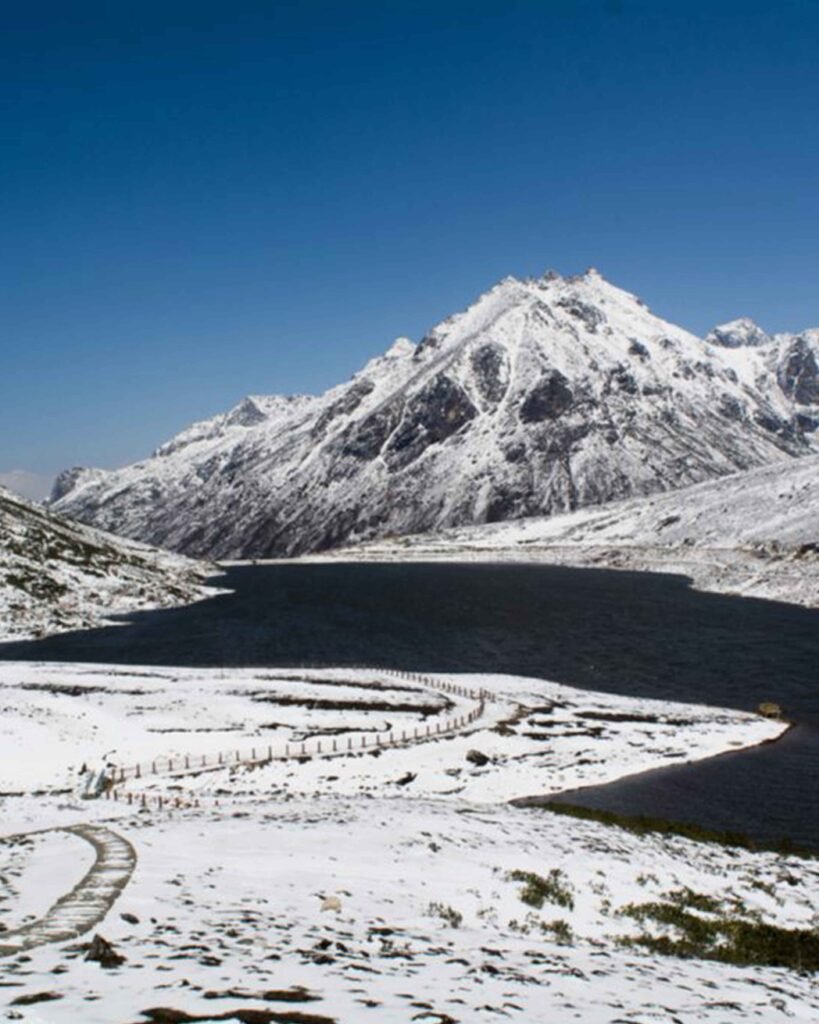
At nearly 14,000 feet, crossing Sela Pass is an adventure where the frosty road is lined by snowy pines and frozen lakes, including the sacred, glistening Sela Lake. Thanks to modern infrastructure like the Sela Tunnel, this high-altitude crossing is now safer, yet the surrounding landscape remains spectacularly wild.
The drive also demands a pause at the Jaswant Garh War Memorial. This is where the tale of Rifleman Jaswant Singh Rawat comes alive—a soldier who is said to have single-handedly held off the Chinese army for three days during the 1962 conflict. This memorial stands as a profound tribute to India’s military valor in the high mountains.
While traveling here, venture to Mukto Village to witness an enduring, yet fading, cultural tradition. Here, a few families still practice the ancient art of making parchment from bark—a special hand-made paper traditionally used for writing Buddhist scriptures. Visiting here is stepping into a quiet corner of the world dedicated to preserving knowledge.
Tawang is an expedition of the body and the soul. It is a land where ancient faith sits side-by-side with modern sacrifice, and where cultural ingenuity carves a sustainable life out of the toughest terrain. From the silent, awe-inspiring chants echoing within the walls of the great monastery to the poignant stillness of the war memorial, Tawang offers a journey that is both visually spectacular and deeply enriching. It leaves visitors with not just memories of beautiful mountains, but a profound connection to the resilient spirit and spiritual depth of the Eastern Himalayas.