
MAJULI: WHERE CULTURE FLOATS ON WATER

Imagine a world where time slows, where ancient traditions breathe, and where a river isn’t just water, but the lifeblood of an entire culture. Welcome to Majuli, the world’s largest river island—a place unlike any other, not merely defined by its size, but by the profound spiritual and cultural heritage it cradles amidst the mighty Brahmaputra.
Due to the severe erosion caused by the powerful Brahmaputra River, the island is slowly, tragically shrinking, which also means, you need to visit this beautiful river island, now!
Majuli is more than an island; it is the living cradle of Neo-Vaishnavite culture, a unique and deeply spiritual tradition established by the 15th-century saint Srimanta Sankardeva. Here, life revolves around the Satras—monasteries that are not just places of worship, but vibrant centers of art, learning, and tradition.
Step into a Satra like Auniati or Garamur, and you’re stepping back in time. You’ll witness the mesmerizing Sattriya dance, a classical Indian dance form born right here, or perhaps catch a Bhaona performance—devotional dramas brought to life with intricate costumes and, most famously, handcrafted masks.
THE MASK MAKERS’ MAGIC
At the Samaguri Satra, you can meet the revered mask-makers whose hands transform clay, bamboo, and cloth into the expressive faces of gods, goddesses, and demons. These aren’t mere props; they are sacred art, imbued with centuries of devotion, used to tell epic tales during the Bhaona. To watch a mask take shape is to witness a piece of living history.
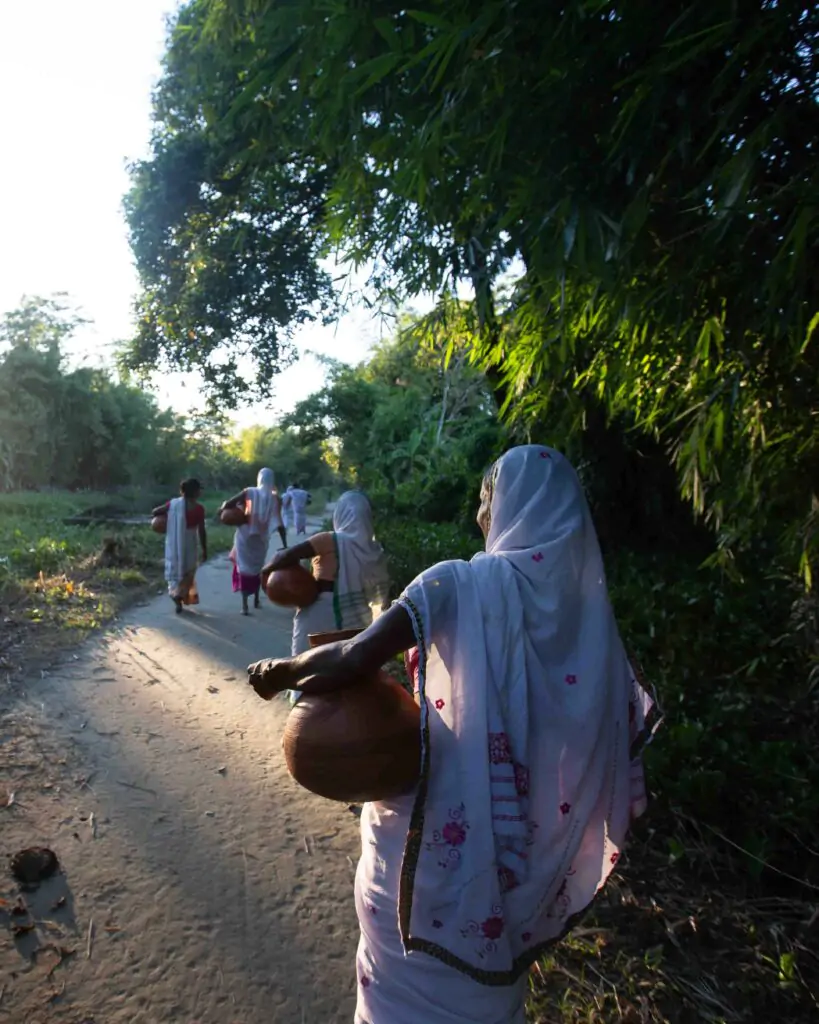
Beyond the Satras, Majuli offers an intimate glimpse into a serene, rural way of life. It’s a harmonious mosaic of communities—the vibrant Mishing, Deori, and Sonowal Kachari tribes living alongside non-tribal groups like the Ahom and Koch. Life here is simple, intertwined with nature, and deeply rooted in community.
Wander through a village, and you might see traditional pottery being made without a potter’s wheel, or women expertly weaving colorful handloom textiles on their backstrap looms. The island’s numerous freshwater wetlands, called beels, are vital, not just for the abundant migratory birds they attract, but as a source of livelihood and spiritual belief, where prayers are offered to the ‘Water God.’
Majuli is an invitation to slow down, to connect with a culture that respects its past, cherishes its art, and lives in harmony with the rhythm of the great river. It’s not just a destination; it’s an experience for the soul, a chance to witness a unique way of life floating beautifully on the water.